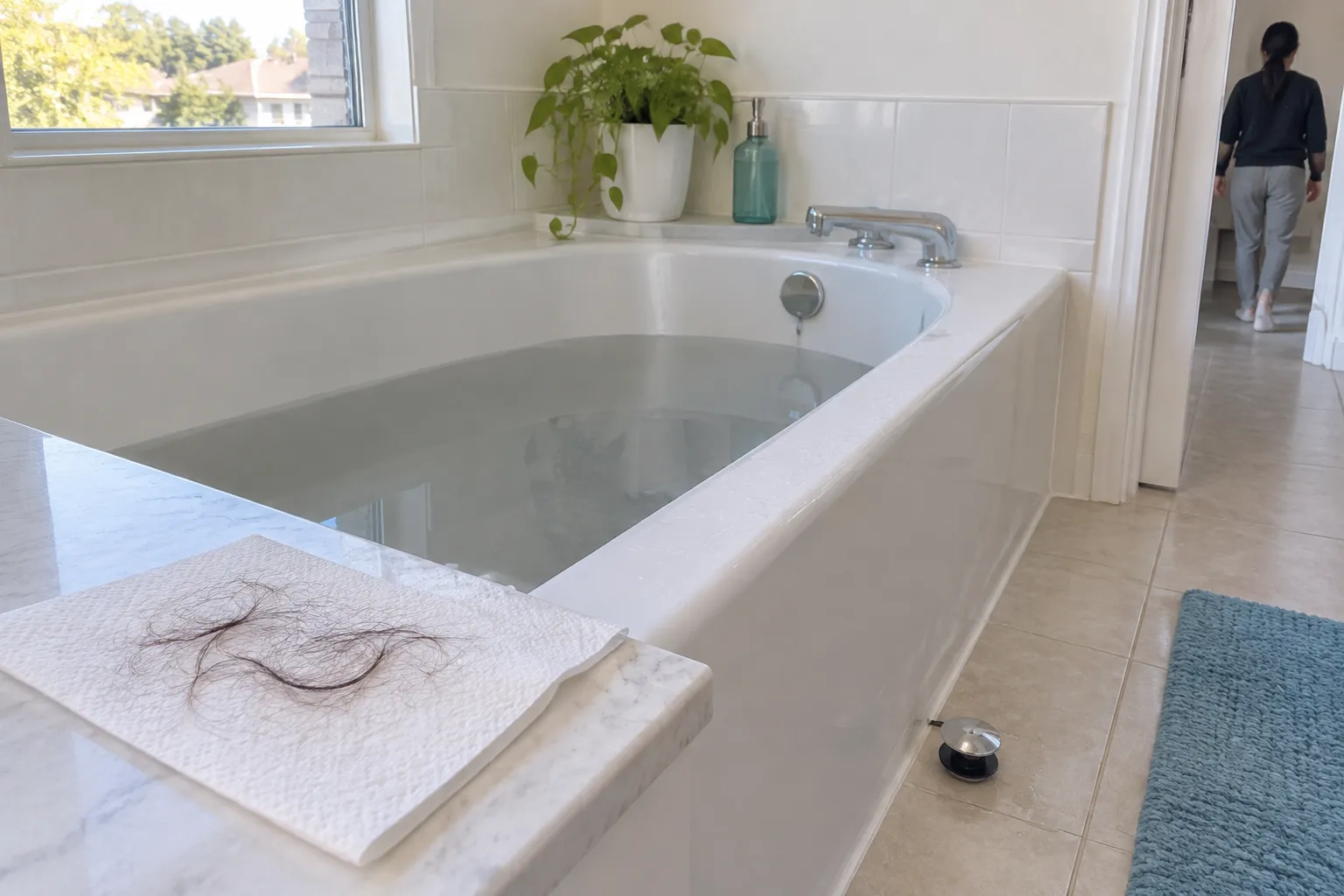
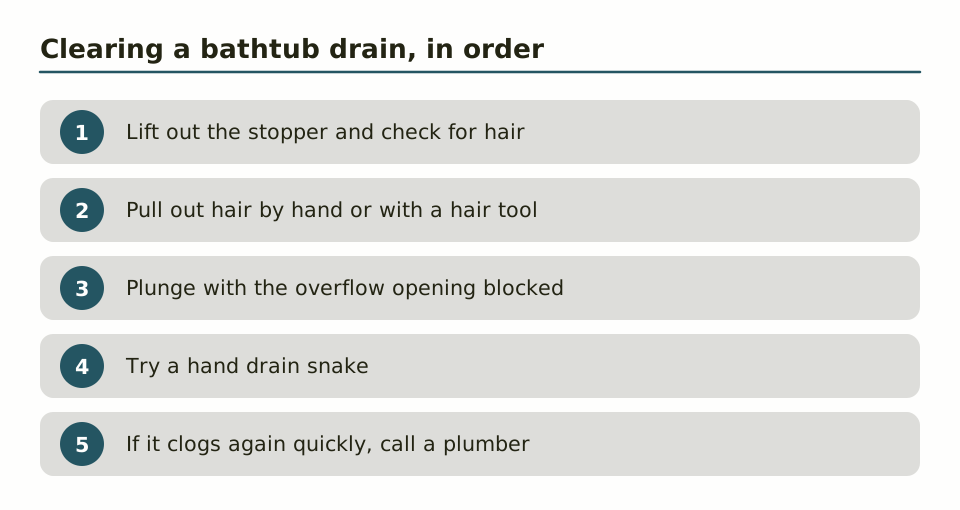
To drain a clogged bathtub, pull out the stopper and remove the hair wrapped around it, then plunge with the overflow opening blocked, and if the water still sits there, feed a plastic drain snake down the opening. That sequence clears most tub blockages without chemicals. If more than one fixture is slow, the problem is further down the line. Our guide to drain cleaning and clogs covers the wider picture, and this page stays with the tub: what to try, in what order, and where DIY stops being sensible.
What should I check before I start working on the drain?
Look at what else is slow. If only the tub is draining badly, the clog is almost always in the tub's own trap or the short branch pipe behind it. If the sink, toilet or washing machine also gurgle or back up, the blockage is in a shared line and a tub-level fix will not reach it.
Clear the tub of standing water you can scoop into a bucket, put on rubber gloves, and lay down an old towel. Keep a flashlight, a flat screwdriver, a plunger with a flat rim, and a bin bag within reach. Skim the water for chemical drain cleaner left from an earlier attempt. If there is any, do not put your hands in it, and read the product label for the safe way to flush it out.
How do I remove hair and soap from the tub drain by hand?
Pull the stopper, wipe the strainer, and fish out whatever you can see. This takes five minutes and solves more tub clogs than any product, because hair collects on the stopper arm and just below the strainer where it knits with soap scum into a plug.
Stoppers come in a few types, and the way to remove them differs:
- Lift-and-turn or push-pull stopper: grip it, turn it counterclockwise, and unscrew it. Some have a small set screw on the side of the cap, so check with a flashlight.
- Flip-it or toe-touch stopper: open it, then twist the cap off, or loosen the small screw under the cap.
- Trip-lever or pop-up type: a lever on the overflow plate works a linkage inside the pipe. Unscrew the overflow plate with a screwdriver and slowly pull the whole linkage out. Hair is usually wound around the plunger or rocker arm.
Wipe the linkage down before putting it back, and rinse the hair into the bin, not the sink.
Can a plunger or a drain snake clear a clogged tub?
Yes. A plunger works well when the clog is soft and close, and a plastic drain snake or a hand-cranked drain auger reaches the hair that a plunger cannot move. Use the plunger first, then the snake if water still sits, and expect to repeat the snake pass once or twice.
For plunging, fill the tub with enough water to cover the plunger cup. Stuff a wet rag firmly into the overflow opening, because air escaping through the overflow takes the force out of each push. Seat the plunger flat over the drain and push and pull with steady strokes for about 20 seconds, then break the seal and watch whether the water drops.
For snaking:
- Remove the stopper and strainer first.
- Feed the snake into the opening until you feel resistance.
- Turn the handle or twist it while pushing gently, so the barbs catch the hair.
- Pull it back slowly and clean what comes up. Repeat until it comes back clean.
- Run hot tap water for a minute to confirm the flow.
Do not force a metal auger past a hard stop. A sharp bend in the pipe feels like a block, and pushing can scratch the pipe or the tub finish.
Do baking soda, vinegar or chemical drain cleaners work?
Baking soda and vinegar can loosen a thin film of soap, but they rarely move a hair plug, so they suit a gentle monthly rinse and not as a rescue. Store-bought chemical cleaners are a bigger decision, because they can hurt your skin and eyes, and they can sit in a blocked pipe where the next person to work on it will meet them.
If you do use a chemical drain cleaner, follow the label exactly, ventilate the room, and never combine two products or add a chemical to a drain that already holds another one. If it does not work the first time, stop. Plunging into a tub full of cleaner splashes it back on you, and a plumber working on the pipe after you will need to know what went in. Very hot tap water, not boiling water, is a safer first rinse after any clearing job, especially in older or plastic pipes that a rolling boil can soften at the joints.
How do I clean a clogged drain in the kitchen, washer or dishwasher?
The same logic applies to the other drains in the house: find the closest, simplest cause first, and treat repeated or multi-fixture problems as a sign of a bigger blockage. The causes just differ by fixture.
- Kitchen sink: grease, food scraps and coffee grounds. Remove and clean the trap under the sink with a bucket below it, then plunge or snake.
- Dishwasher: it usually drains through the kitchen sink or the disposal. If the dishwasher leaves standing water, clear the sink side and the disposal first, and check the drain hose for a kink or a clump of food.
- Washing machine: lint is the usual culprit. Clean the lint filter if your machine has one, check the drain hose, and look at the standpipe it empties into. Slow draining in the standpipe points to a clog in the branch pipe.
- Bathroom sink: hair and toothpaste, caught on the pop-up stopper. Take the stopper out and clean it.
If you are working on a kitchen disposal and the unit hums but will not turn, the repair is a different job; our page on garbage disposal repair explains what goes wrong and what a local plumbing business will check.
What if the clog is in the drain vent or keeps coming back?
A plumbing vent is a pipe that runs up through the roof and lets air into the drain system, so water flows out freely instead of slowly or with a gurgle. When a vent is blocked by a bird's nest, leaves or debris, the whole system can drain slowly and gurgle, even though no single trap is blocked.
Gurgling from several drains at once, a toilet that bubbles when you run the tub, and drains that slow down only on windy or rainy days all point to vent trouble. Getting onto a roof to check a vent is a fall risk, and it is a job for a local plumbing business, not an afternoon project. The same goes for any problem that keeps returning within weeks of clearing it: that points to a partial blockage, a pipe with a belly in it, or roots or damage further along.
A drain liner is a different job again. It is a lining installed inside a damaged pipe, and it is a repair for pipe damage, not a way to clear a clog. It is quoted by a plumbing business after a camera look inside the pipe.
When should I stop and ask a local plumber to clear the tub drain?
Stop when you have plunged and snaked twice without a lasting result, when water backs up into the tub from another fixture, or when you notice sewage smell with the backup. Those are warning signs that the blockage is in the branch or main line, past what a hand tool at the tub can reach.
Other warning signs include more than one fixture draining slowly, water that rises in the shower when the toilet flushes, and a tub that clears but fills again within a day. A local plumbing business can use a motorized cable machine, or a camera to see the pipe. For stubborn, greasy or root-filled lines they may use hydro jetting, which cleans the pipe wall with high-pressure water; our page on hydro jetting cost explains what moves the price. If you want to know what to expect from a visit, see how a drain cleaning company works and how a shower clogged drain call differs from the tub.
In California, plumbing work that costs $1,000 or more in labor and materials, or that needs a permit, must be done by a contractor holding the right state license. A simple drain clearing is usually well below that, but you can check any contractor's license on the CSLB website. This site is a quote service, and the plumbing business that visits holds its own license.