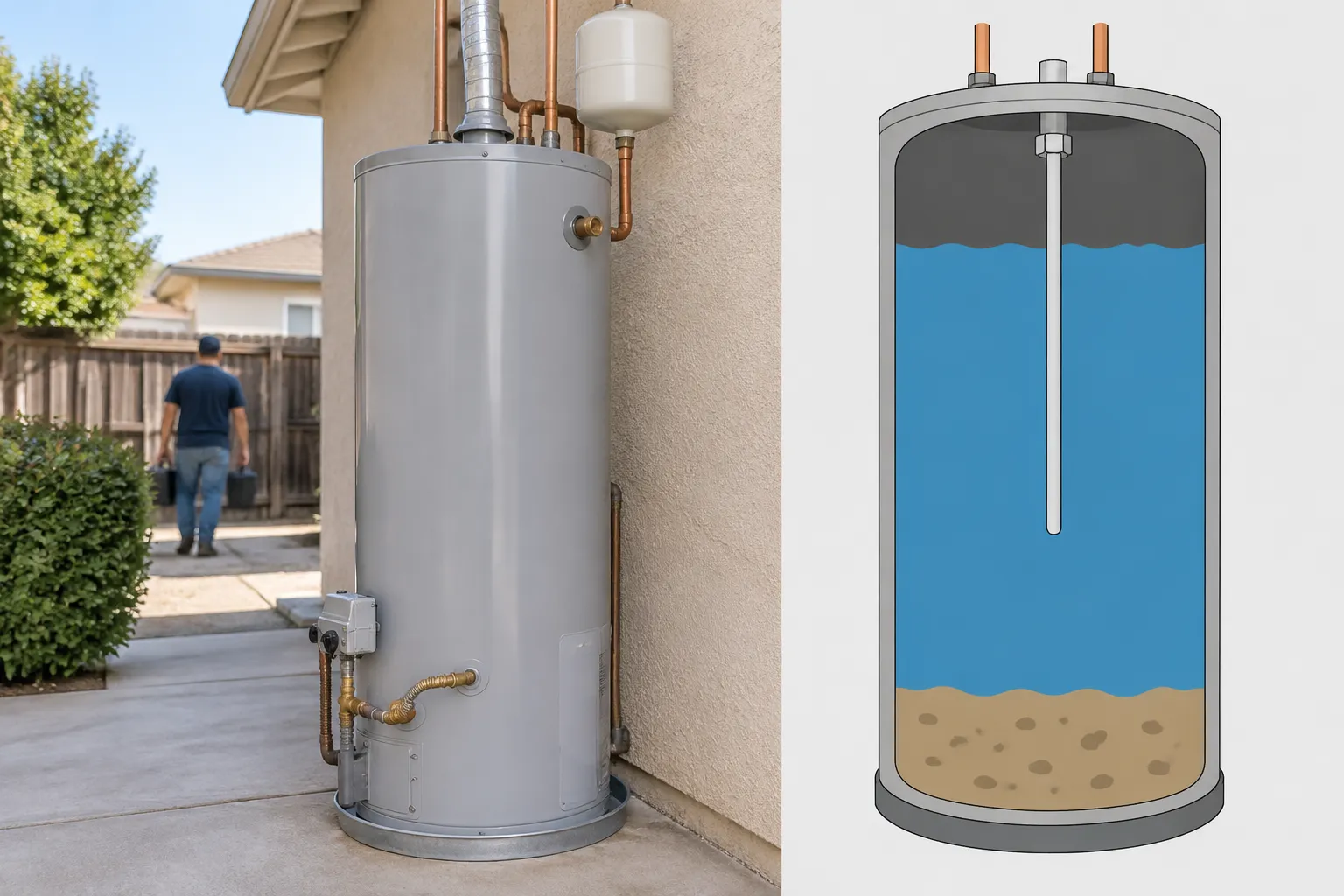
An anode rod is a metal rod, usually magnesium or aluminum, that hangs inside a tank water heater and corrodes in place of the steel tank. Once it is used up, the tank itself starts to rust. Replacing the rod is a small job compared with replacing the heater, and many manuals and plumbers suggest checking it every few years. If the tank is already leaking, a new rod will not help. See the water heater repair plumber page for other faults, or request quotes below.
What does an anode rod do, and how do you know it needs replacing?
The rod is a sacrificial part: water attacks it before it attacks the tank lining. When most of the metal is gone, the tank begins to corrode. Signs include a rod worn thin or coated when inspected, rusty hot water, a rotten-egg smell, popping noises from sediment and a tank that is several years old without a check.
Plumbing guides often suggest inspecting the rod every few years, sooner in hard or aggressive water, though there is no single interval for every tank, so follow your owner's manual. Inspect it by turning off power or gas, closing the cold water valve, relieving pressure, draining a little and unscrewing the rod from the top of the tank. Replace it when it is badly eroded, or bare steel shows along most of its length.
An inspection is also a chance to check the temperature and pressure relief valve and the sediment level. Sediment is covered on the flushing sediment from a water heater page.
How is an anode rod replaced?
The plumber shuts off power or gas and the cold water supply, relieves pressure, drains some water, loosens the rod with a socket (commonly a 1-1/16 inch hex head), removes it, wraps the threads of the new rod with sealing tape, installs it, refills the tank and checks for leaks. Tight clearance above the heater may call for a flexible rod.
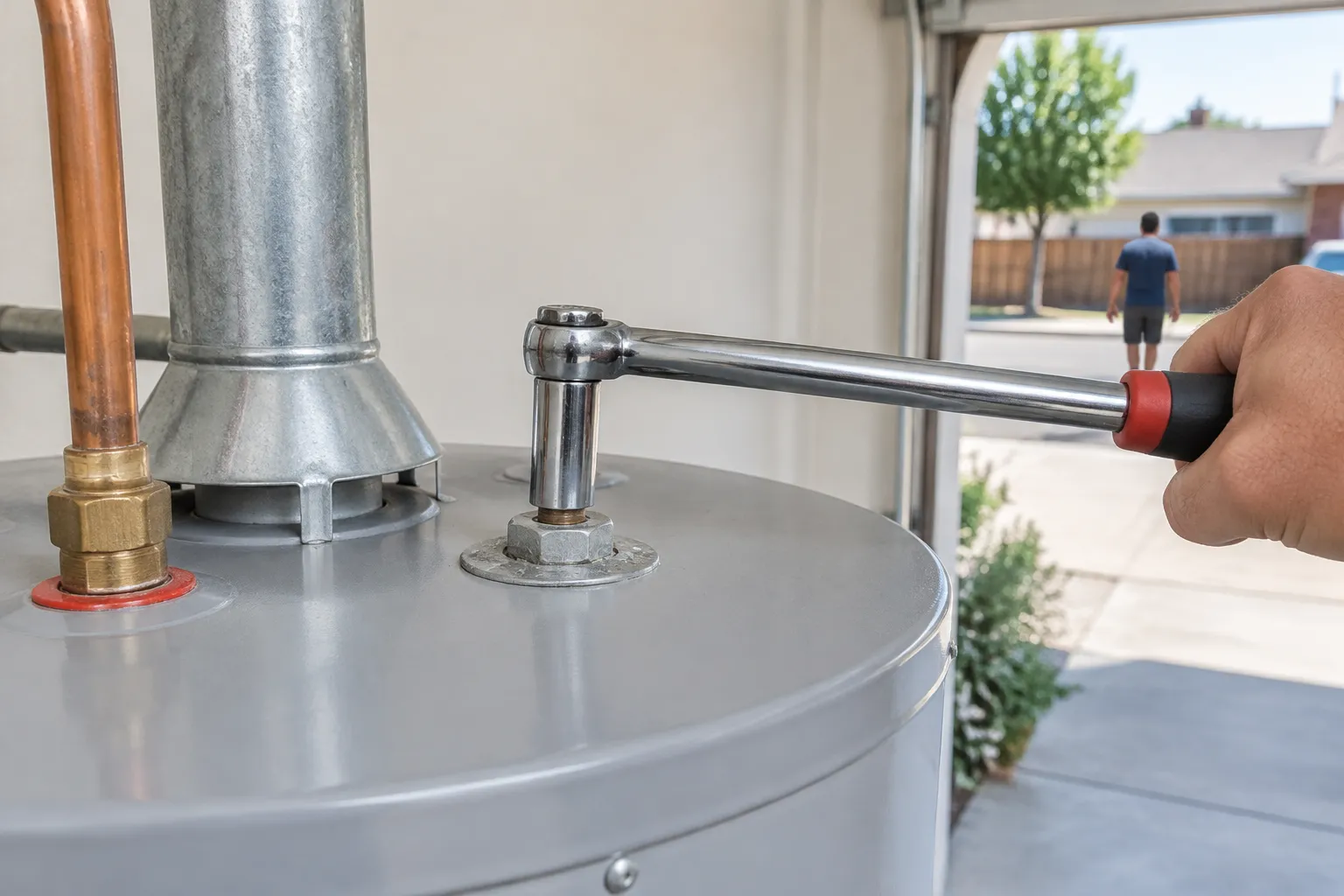
Common snags: a rod fused into the tank by corrosion, a space too short above the heater for a straight rod and fittings that leak after reassembly. A plumber has an impact wrench and flexible rods for those cases. Do not force the rod if the tank starts to move or leak.
Safety points for a DIY attempt: turn off the electric breaker or set the gas control to off, keep the tank filled when power is on so elements do not burn out, and know where the water main valve is. Anything involving gas piping or the burner needs a California contractor license. California's plumbing classification, C-36, covers installing and replacing water heating equipment and its safety devices.
Which anode rod material should you choose?
Magnesium and aluminum are the common rod materials, and which suits a tank depends on the water, and zinc-aluminum alloys and powered rods are options when water smells of sulfur. Material choice depends on your water and the tank. A plumber can match it to your tank and your symptoms.
If hot water smells like rotten eggs, the rod can be one cause because sulfate reducing bacteria react with the rod. Replacing it with a different type may help, but removing the rod permanently is a bad idea. At least one manufacturer's manual warns that removing it for good can void the warranty, and the tank loses its protection. Ask the plumber about the options.
Your water supplier publishes an annual water quality report that lists minerals, which helps when picking a rod.
What should you do about a water heater pilot light problem?
If the pilot light on a gas water heater goes out, relight it by following the instructions on the label on the heater. If it keeps going out, the usual causes are a worn thermocouple, a dirty pilot orifice, a draft or a failing gas control valve. Repeated outages are a reason to have a plumber look at it.
If you smell gas, do not relight anything. Leave the building, call 911 from outside, then call your gas utility. PG&E's emergency page lists 1-800-743-5000 for PG&E customers. Do not use switches or phones inside.
Gas appliance connections and control valves need a contractor license. A homeowner can relight a pilot per the label but should not repair gas parts.
When is replacing the tank a better choice than replacing the rod?
If the tank is leaking, rusting at the seams or is well beyond its expected years, replacement makes sense. A rod can extend a tank that is in good shape but cannot repair corrosion that has already gone through the wall. Weigh the age, the leak history and the warranty.
A failing tank often shows a puddle, a wet base or rust at the bottom fittings. See water heater leaking and water heater leaking hot water. For the price of the rod job, see anode rod replacement cost, and for a new unit, water heater cost. California requires water heaters to be strapped against earthquake movement, and a replacement commonly needs a permit and inspection, so ask the plumber.
Request quotes for either an inspection or a replacement.