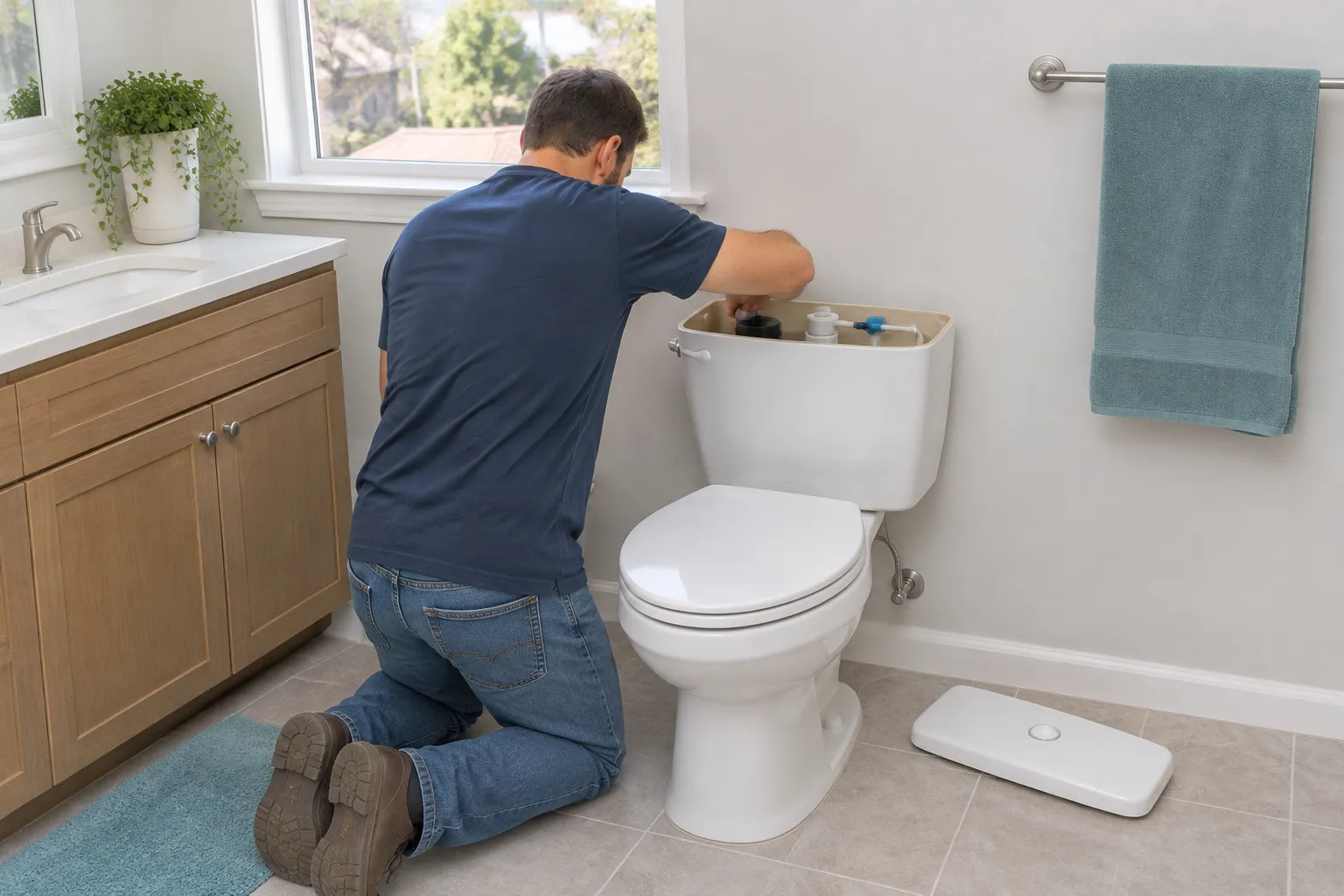
A toilet that runs, leaks at the base, clogs often or will not flush strongly usually needs one of four fixes: a new fill valve, a new flapper, a new wax ring or a new supply line. Small parts like these are quick work for a plumber. A cracked bowl or a leak from the drain pipe is bigger. Tell the plumbing business what you see and it will say which kind of visit to expect. You can start from the home page or ask for quotes below.
What is the most common toilet repair?
The most common repair is the flush mechanism inside the tank: a worn flapper that lets water seep into the bowl, or a fill valve that keeps refilling. Both cause the "running toilet" sound and a higher water bill. The parts are small and the repair is usually short for a plumber, and many people do the swap themselves.
Before you call, try the dye test the EPA's WaterSense program describes: drop a few drops of food coloring in the tank, wait about ten minutes without flushing, and see whether color reaches the bowl. If it does, the flapper or flush valve seat is leaking. Flush right afterward so the dye does not stain. Our guide to fixing a running toilet walks through the tank parts in order.
If the problem is the fill valve instead, the water level never settles or the hissing does not stop. The page on repairing a toilet fill valve covers how that part works.
Who do you call for a broken toilet?
Call a plumber when the toilet leaks onto the floor, will not stop running after you have replaced the flapper, is cracked, rocks on the floor or backs up with other drains. For a clog in just that toilet, a plumber or a drain cleaning business can handle it. A simple part swap is the only job where a handyman is a realistic option.
Any repair that touches the drain flange, the closet bolts, a shutoff valve inside the wall or a permit-level change is plumbing work. California licenses plumbing contractors under the C-36 classification, and you can check any contractor at cslb.ca.gov. Small unlicensed jobs are limited by law, so ask a business directly what it will do.
If you are weighing a handyman against a plumber for a replacement, the page on handyman versus plumber toilet install cost explains where the line sits.
Do handymen fix toilets?
Some handymen replace a flapper, a fill valve or a supply line, and that can be a sensible small job. The risk is the ones that look small and turn out to involve a bad flange, a rotted floor or a hidden leak. California limits unlicensed contracting to small jobs and does not allow it for work that needs a permit, so ask whether the person holds a license.
Technicians who work for a plumbing business usually carry common toilet parts on the truck, which can mean the repair is finished in one visit. A handyman may need to return with parts. Neither is wrong; the better choice is the one that fits the scope of the job and the risk of getting it wrong.
How is a toilet leak at the base repaired?
A leak at the base usually means the wax ring or the closet bolts have failed. The plumber shuts the water off, drains the tank and bowl, lifts the toilet, cleans the flange, fits a new wax ring or seal, sets the toilet back and tightens the bolts evenly. If the floor around the flange is soft, the repair expands.
Leaks from the tank to the bowl, from the supply line or from the tank bolts look similar at first glance. Dry the floor, wrap tissue around each joint and see where it gets wet first. A plumber for a toilet leak will track the source in a few minutes. For a burst supply connection, see burst toilet supply line.
Sometimes the toilet is in poor shape overall. Hairline cracks in the bowl or tank, repeated clogs and a flush that is weak even after cleaning can mean replacement is a better use of money than another repair.
What should a toilet repair quote include?
A good quote names the problem, the part or parts, the labor and any extras such as a new shutoff valve or supply line. It also says whether a replacement toilet is part of the price. Prices vary with the job, the parts, the access and whether the floor needs work, so any figure online is a guide and the plumber quotes the real price.
Ask the business:
- Does the price include the parts and removal of the old ones?
- Is the shutoff valve in good shape, or will it need replacing?
- What if the floor around the flange is damaged?
- Is there a written warranty on parts and labor?
For a toilet that clogs, not leaks, the clogged toilet plumber page covers drain clearing. When you are ready, request quotes from local plumbing businesses and compare what each includes.