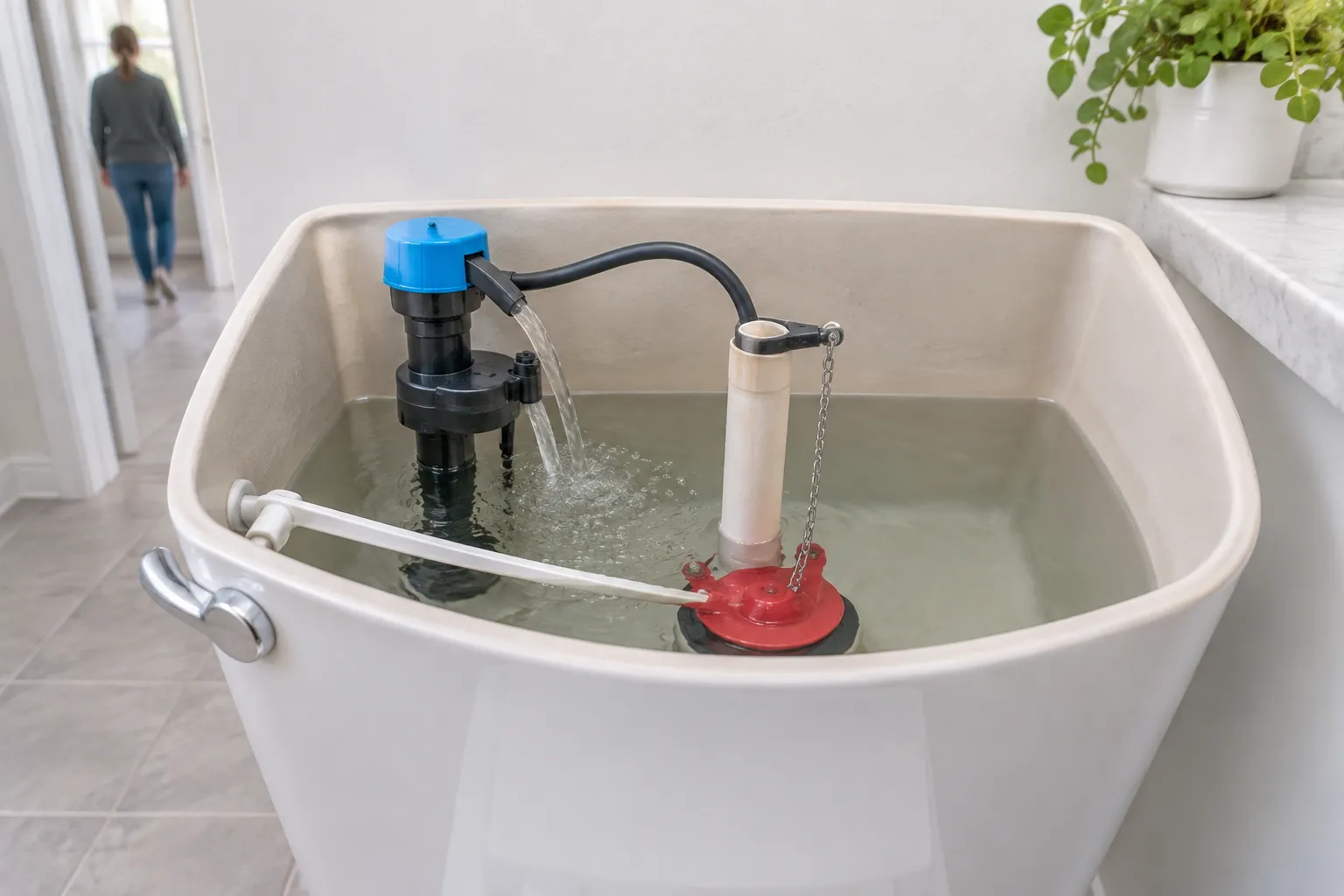
To repair a running toilet, take the tank lid off, flush, and watch what happens. If water trickles past the rubber flapper at the bottom, replace the flapper. If water rises up the overflow tube, lower the float. If the fill valve hisses and never shuts off, clean or replace it. Most of these jobs take under an hour with a part from a hardware store. This page belongs to our wider toilet repair and replacement guide, and it covers the DIY side: diagnosis first, then each fix, then the point where a local plumbing business should take over.
Why does my toilet keep running after I flush?
The tank is not sealing or not stopping its refill. Either the flapper leaks water into the bowl, so the tank keeps topping itself up, or the float lets the water level climb above the overflow tube, so it spills down the tube forever. A third cause is a fill valve that fails to close even when the tank is full.
It matters because a running toilet wastes real water. The US EPA's WaterSense program lists worn toilet flappers among the common household leaks, and puts the average home's leaks at more than 9,300 gallons a year. A quiet trickle you can barely hear is still worth fixing.
How do I find which part is leaking?
Do a dye test. Take the lid off the tank, drop in a few drops of food coloring, and do not flush for 15 to 20 minutes. If color appears in the bowl, the flapper or its seat is leaking. If the tank stays colored and the water still runs, the problem is the float or fill valve.
Then check the water level. It should sit about an inch below the top of the overflow tube, the open vertical pipe in the middle of the tank. If water is spilling into that tube, the level is too high. Also listen. A hissing refill that never stops points to the fill valve, and a phantom flush every few minutes, when the tank briefly drops and refills with nobody using the toilet, points to a leaking flapper.
Before any repair, turn the water off at the shutoff valve on the wall behind the toilet by turning it clockwise, and flush to empty the tank.
How do I replace a worn flapper?
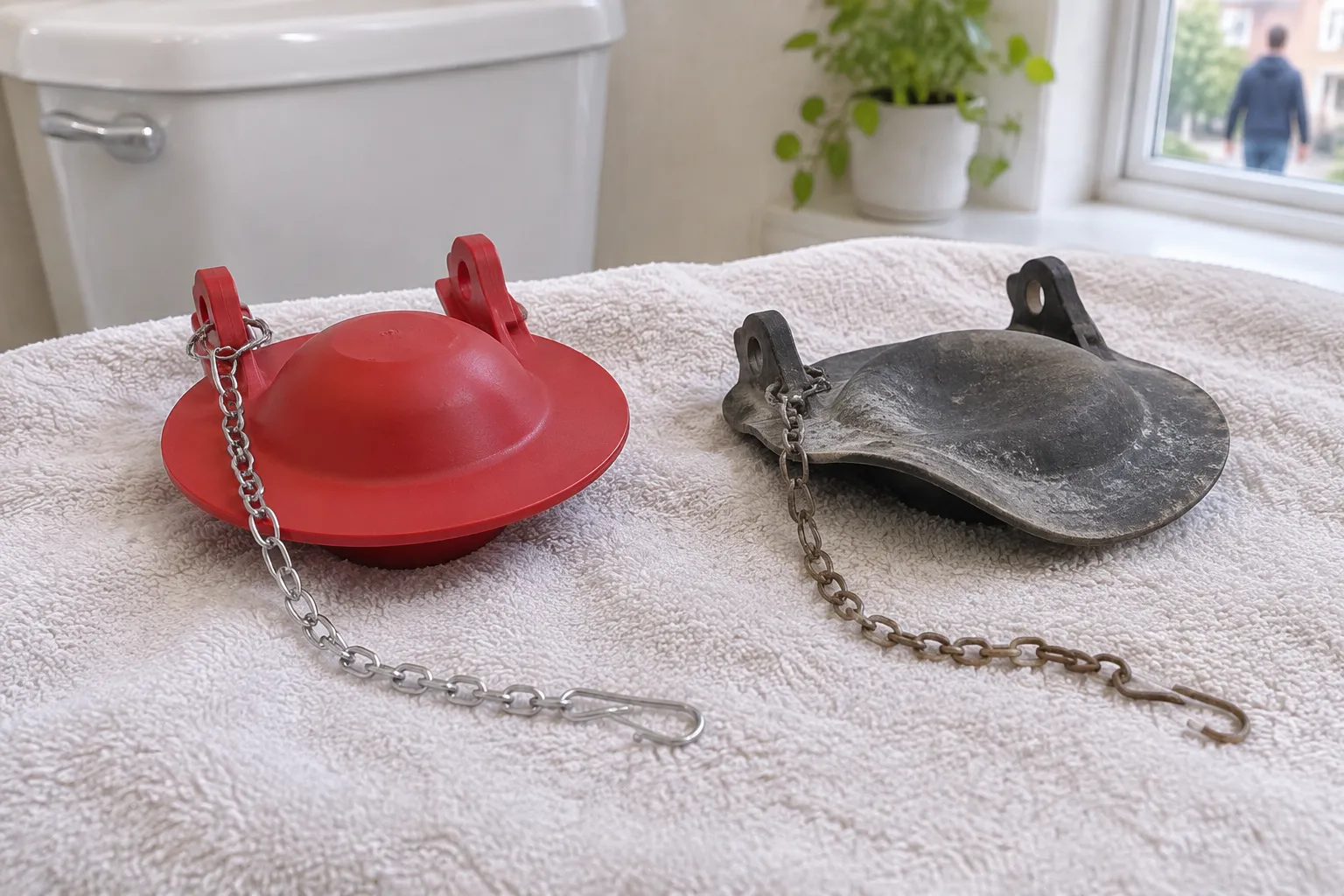
Replace it if the flapper looks warped, cracked, gummy or slimy to the touch. Unhook it from the two pegs on the overflow tube, or lift it off the pivot ring, and unclip the chain. Buy a flapper that matches your toilet's flush valve size (often 2 or 3 inch, so check), and clip it on in the same position.
Steps:
- Shut off the water and drain the tank.
- Unhook the old flapper and take it to the store so you can match it.
- Wipe the flush valve seat, the ring the flapper sits on, with a damp cloth so it is smooth and free of mineral buildup.
- Attach the new flapper and the chain, leaving about half an inch of slack so the flapper can fully close.
- Turn the water back on and repeat the dye test.
A chain that is too short pulls the flapper open a hair, and one that is too long can get caught under it. Both create a slow leak that looks like a bad flapper.
How do I fix a toilet float that keeps running?
Adjust it. The float controls the water level, and if it is set too high, the tank overfills and drains down the overflow tube. Lower it so the water stops about an inch below the tube's top. On a ball-and-arm float, bend the arm or turn the adjustment screw. On a cup float that rides up the fill valve, squeeze the clip and slide the cup down the rod or turn the adjustment screw on the valve.
If the float is waterlogged, which you can tell because a plastic ball feels heavy or has water inside, it will not rise to shut the valve and should be replaced. After any change, flush and watch the refill, then check that the water stops by itself. Whatever the brand on your toilet, whether American Standard, Glacier Bay, Mansfield or another, flush valve and flapper sizes can differ, so match the part to your model number, usually stamped inside the tank or on its underside, or take the old part to the store.
When does the fill valve need to be replaced?
Replace it when it hisses, shuts off slowly, or never shuts off even after you lower the float. A fill valve has a rubber seal that wears out, and mineral deposits can stop it from closing. Try shutting the water off, removing the cap, and rinsing the seal first. If the sound persists, a new universal fill valve is a standard part.
The job runs about like this: shut off the water, drain the tank, disconnect the supply line from the base of the valve, loosen the locknut under the tank, lift out the old valve, and drop in the new one at the same height. Then reconnect, adjust the height per the package, set the float, and test. Hand-tighten the supply nuts and a quarter turn more, because a cracked tank or a stripped nut is a worse problem than a running toilet. While you have the tank open, check the refill tube is clipped over the overflow tube, not pushed inside it, and if the valve itself is the culprit, the guides to repairing a toilet fill valve and repairing a toilet inlet valve go further.
Is it worth fixing myself or should I call a plumber?
Fix it yourself if the problem is a flapper, a float setting or a fill valve and you are comfortable turning off a shutoff valve. Call a local plumbing business if the shutoff valve will not close or leaks, if the tank is cracked, if water appears around the base of the toilet, or if a repair does not stop the running.
A leak at the base can point to a failed wax ring, the seal between the toilet and the floor flange. Do not keep using a toilet that rocks or leaks at the base, because water can reach the subfloor. A broken supply line is a different emergency, and the guide on a burst toilet supply line covers the first steps. If you decide you would rather not do the work, the technicians a local plumbing business sends can usually handle a running toilet in one visit, and the plumber quotes the price.