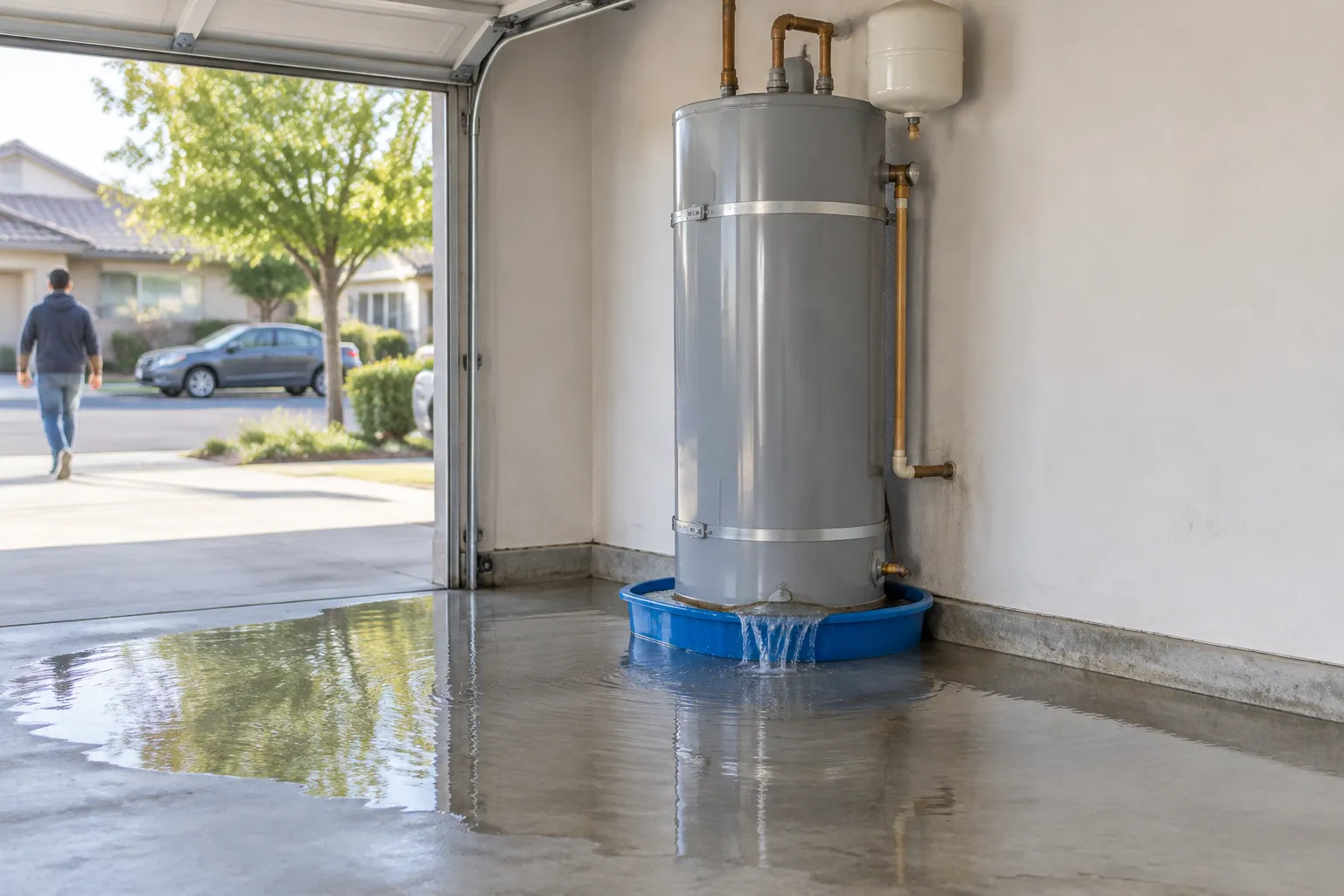
An emergency water heater problem is one where water is leaking steadily, you smell gas, the unit is making loud banging or the relief valve is discharging hot water. In each case, shut off the cold-water supply to the heater and its power or gas, then ask local plumbing businesses for quotes and ask each one when it can come. A tank that has simply stopped heating is less urgent, but it is still worth a fast call in winter. This page is part of water heater repair and replacement. To send one request to local businesses, use the quote page. Other jobs are listed on the Stockton plumbing home page.
What should you do first when a water heater fails?
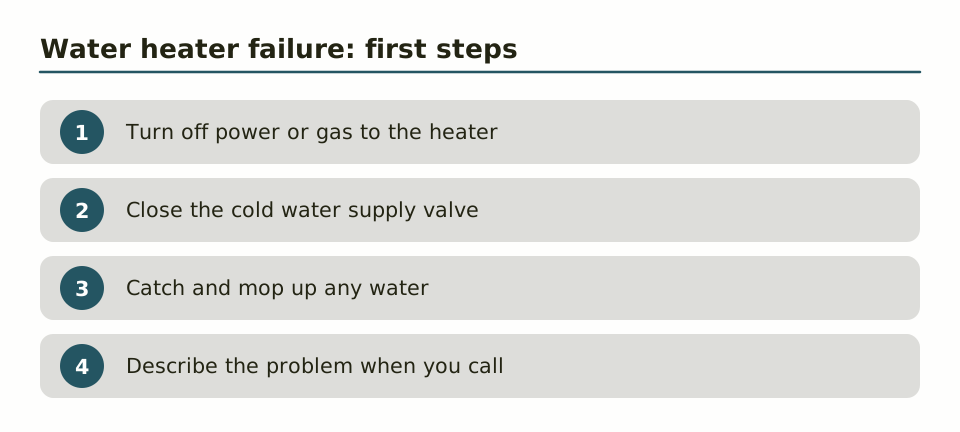
Stop the water and the energy, then look. Close the cold-water inlet valve on top of the heater. For an electric unit, switch off its breaker. For gas, turn the gas control to off per the label. Then check where the water is coming from, move belongings away from the floor and photograph any damage for your insurer.
If you smell gas, do none of that. Walk out, avoid switches and phones inside, and make the 911 call and the call to your gas utility from outside. Pacific Gas and Electric says to leave the area immediately and not to turn gas back on yourself after it is shut off at the meter. Do not relight a unit that smells of gas.
Also leave if a carbon monoxide alarm sounds. The U.S. Consumer Product Safety Commission says to get outside immediately and call 911 and not to ignore the alarm.
Which water heater problems are real emergencies?
These need attention the same day:
- A gas smell or a carbon monoxide alarm.
- Steady leaking from the tank or fittings, especially if you cannot stop it by closing the inlet valve.
- Hot water or steam from the relief valve pipe, which can mean excess pressure or temperature. See water heater pressure valve leaking.
- Scorching hot water at the taps, which is a scalding risk.
- Water near the electrical panel or the unit's wiring.
Less urgent, but frustrating: no hot water, lukewarm water, a pilot that will not stay lit, or a tripping breaker. In these cases, the tank is normally not dangerous, and you can usually wait for the next available visit. For slow leaks, read what a leaking water heater means.
How much does emergency water heater repair cost?
A guide, not a quote: published national figures put a typical water heater repair at $150 to $750, with a new tank installed at $900 to $3,000. Evening, weekend and holiday calls may cost more than daytime visits, so ask for the call-out fee and hourly rate in writing before work starts.
| Item | Typical range |
|---|---|
| Common repair (thermostat, element, valve, igniter) | $150 to $750 |
| Heating element replacement | $200 to $750 |
| Tank replaced and installed | $900 to $3,000 |
The plumber quotes the real price. Prices shift with gas versus electric, tank size, access to the unit, the part itself, and whether permits or venting work are needed, besides the hour of the call. For a fuller breakdown see water heater cost, and for the general emergency pricing see emergency plumber cost.
Should you repair or replace in an emergency?
Do not decide in a panic. Ask the plumber for both prices: the repair, and a replacement with the permit and strapping included. Rheem suggests replacing when a repair costs more than about half the price of a new heater, when the tank is leaking from its body, or when a unit past 10 years old needs repeated repairs. A young unit with a failed part is usually worth repairing.
Rheem puts tank heater life at 8 to 12 years on average, so age is a good first question. The label on the side of the heater shows the model and a date code, and the plumber can read it. A tank leak almost always means replacement, because the steel liner has corroded through.
Replacement is also the time to compare types. See electric vs gas water heaters and installing a tankless water heater before you commit, since a rushed swap can lock you into the wrong size.
Can you get a replacement water heater the same day?
Sometimes, depending on the business, the day and whether it has a unit of the right size and fuel in stock. This site does not dispatch plumbers and cannot promise a same-day visit, so ask each business directly when it can come and whether it has a replacement available.
A same-day replacement still needs the usual parts: a permit, earthquake strapping, a working relief valve and a correct vent or electrical connection. California requires water heaters to be braced against earthquakes, and San Joaquin County says a permit is required to replace a water heater. Ask the plumber who pulls the permit and whether it is in the price. If you live inside city limits, ask which office issues it.
While you wait, you can drain a leaking tank to reduce flooding by connecting a hose to the drain valve, as in the Building America guide to flushing a tank, but only after the power or gas is off and the cold inlet is shut. Water from the tank is hot.