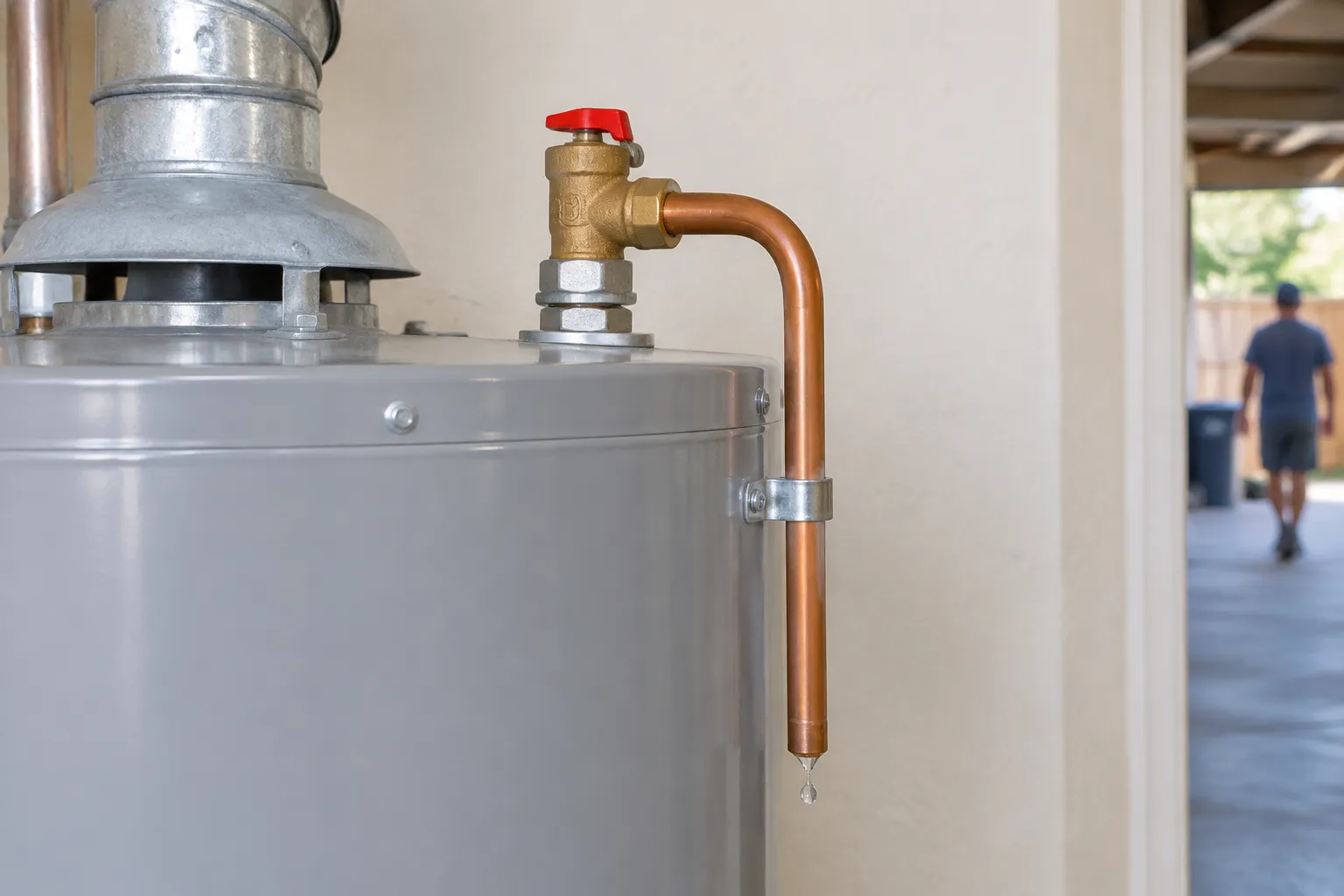
A water heater pressure valve leaks for one of three reasons: the tank pressure or temperature really is too high, the valve has worn out, or the valve is fine and thermal expansion is pushing a little water out each heating cycle. A steady drip, a stream, or any steam means turn off the heater and call a local plumbing business. Never cap or plug the valve. This page belongs with our guide to water heater repair, and it covers the valve alone: what it is, why it leaks, and what to do.
What is the pressure valve on a water heater and what does it do?
It is the temperature and pressure relief valve, often called the T&P valve, a brass valve on the side or top of the tank with a short pipe running down from it. If the water gets too hot or the pressure climbs too high, it opens and lets water out so the tank does not rupture.
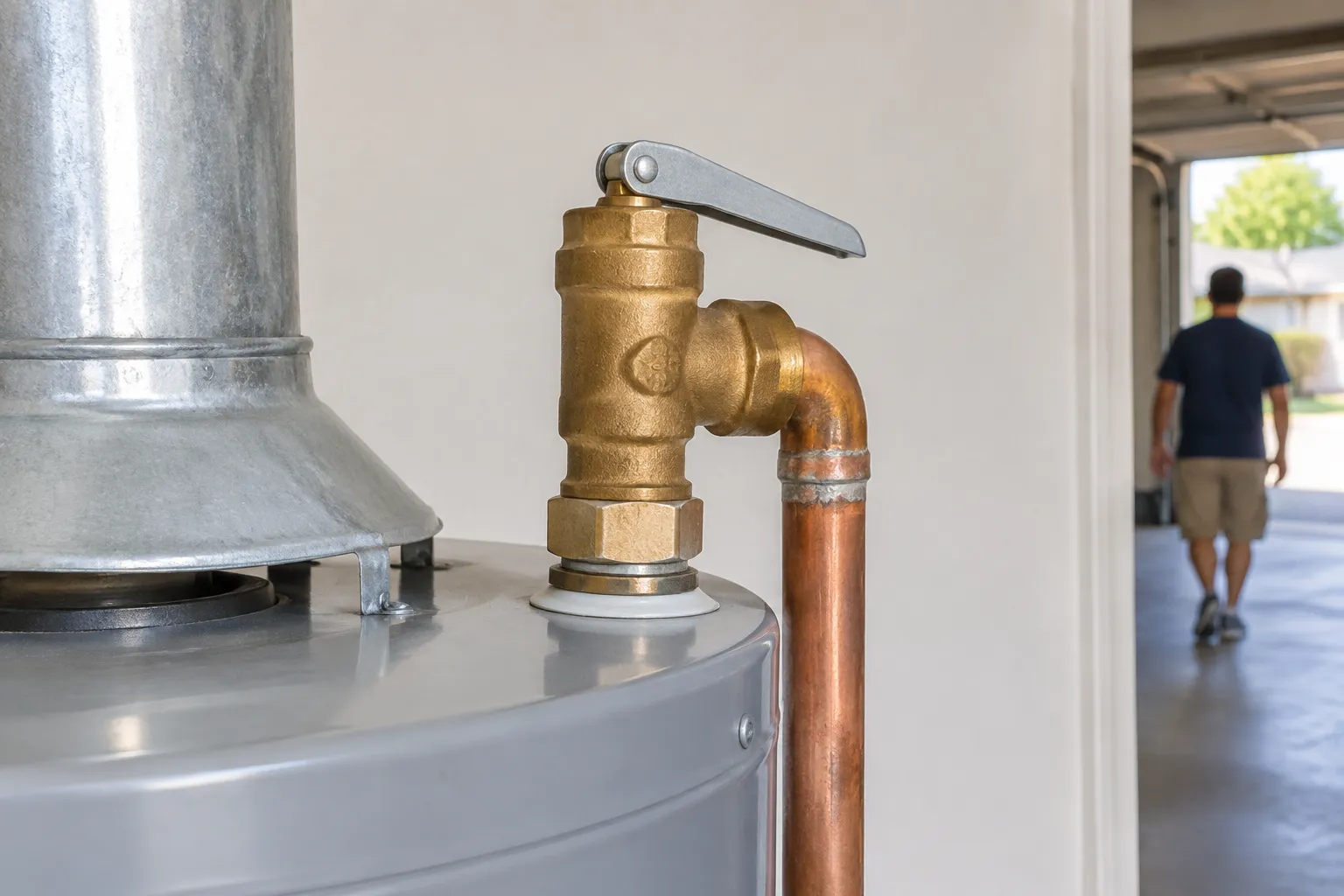
That is why a leaking valve deserves attention: it is the last line of defense for the tank. Gas and electric tank heaters both have one, and the discharge pipe should end where escaping hot water cannot scald anyone, usually near the floor or outside. If your heater has no pipe, or the pipe ends in a spot where hot water could spray, a plumber should look at it.
Why is my water heater pressure relief valve leaking?
The common causes are thermal expansion in a closed system, a water pressure that is too high coming into the house, a thermostat set too hot, a sediment-coated or worn valve seat, or a true overheating fault. A tiny drip that appears only while the heater is heating often points to expansion.
When water heats, it expands. If the house has a check valve or a pressure regulator, that water has nowhere to go, so the pressure rises until the valve opens. An expansion tank on the cold line absorbs it. If you have a pressure regulator and no expansion tank, the dripping is a hint to ask a local plumbing business about one. Another cause is a valve that opened once and did not reseat because a grain of mineral stuck to it. Worn valves also drip on their own as they age.
Higher incoming water pressure also matters. California's plumbing code calls for a pressure regulator when the pressure at a property exceeds 80 psi, so a gauge reading on an outdoor spigot can tell you if the supply is the cause. The page on a water pressure regulator explains that part.
Is a leaking pressure valve dangerous?
It can be. A valve that drips from expansion is more a nuisance, but a valve that is discharging because the tank is overheating signals a real problem, and a stuck-open valve could be hiding a fault. Treat a stream of water, steam, or a hot, rumbling tank as an emergency.
If you see steam or hear rumbling or banging, switch the heater off at the breaker or the gas control, and shut the cold water supply to the tank. Stay clear of the discharge pipe, because the water is hot enough to scald. If you smell gas, the advice from PG&E is to leave the area immediately and call 911 from a safe distance, then call PG&E, and not to switch lights or use anything that could spark. Do not relight a gas heater yourself. The page on emergency water heater repair explains what to ask a local plumbing business for in that case.
Can I fix a leaking water heater relief valve myself?
You can do the simple checks, but replacing the valve is a job to leave to a local plumbing business unless you are comfortable draining the tank and working with hot water. Checks you can do: look at where the water is coming from, confirm it is the valve and not a pipe joint, and check the thermostat setting.
The US Department of Energy suggests setting a home water heater to 120 degrees F, which also lowers scald risk. If yours is set far higher, lower it and see if the drip stops. Some people test the valve by lifting its lever, but a valve that has been in place for years can fail to reseat afterward and start leaking, so check the heater's manual first and have a bucket ready under the discharge pipe.
Never put a cap, plug or thread tape on the valve opening or the discharge pipe. A blocked valve defeats the safety purpose of the part and could let the tank fail. Never replace the valve with one that has a different pressure rating from the tank's marking. A replacement needs the right rating and the right length for your tank, which is why this is usually a plumber's job.
How much does it cost to replace a water heater pressure valve?
The part is inexpensive compared with the heater, and the main cost is labor and any other repair found at the visit. A plumber quotes the real price after seeing your water heater, and the final figure depends on access, whether the tank needs draining, and whether an expansion tank is also needed.
No published figure from a source worth trusting turned up for this part, so there is no number here. For the cost of a bigger job, see water heater cost, and if the relief valve leak is a sign the tank itself has worn out, the replacement side is covered there. In California, plumbing work that costs $1,000 or more in labor and materials, or that needs a permit, requires a contractor holding the right license. A valve swap is generally far below that, but a heater replacement may not be. This site is a quote service, and the business that visits holds its own license, which you can check on the CSLB website.
What should I do right now if the valve is dripping?
Put a bucket under the discharge pipe, check whether the drip is slow or a steady stream, and look at the tank for rust or wet insulation. A slow drip can wait for a visit within days. A steady stream, steam or a hot tank cannot, so turn off the heater and shut off the cold supply.
Take a photo of the valve and the tank's label, which gives the model, capacity and pressure rating. That helps a plumber arrive with the right part. If water also pools around the bottom of the tank, the leak may be the tank, and why a tank leaks is a separate page.