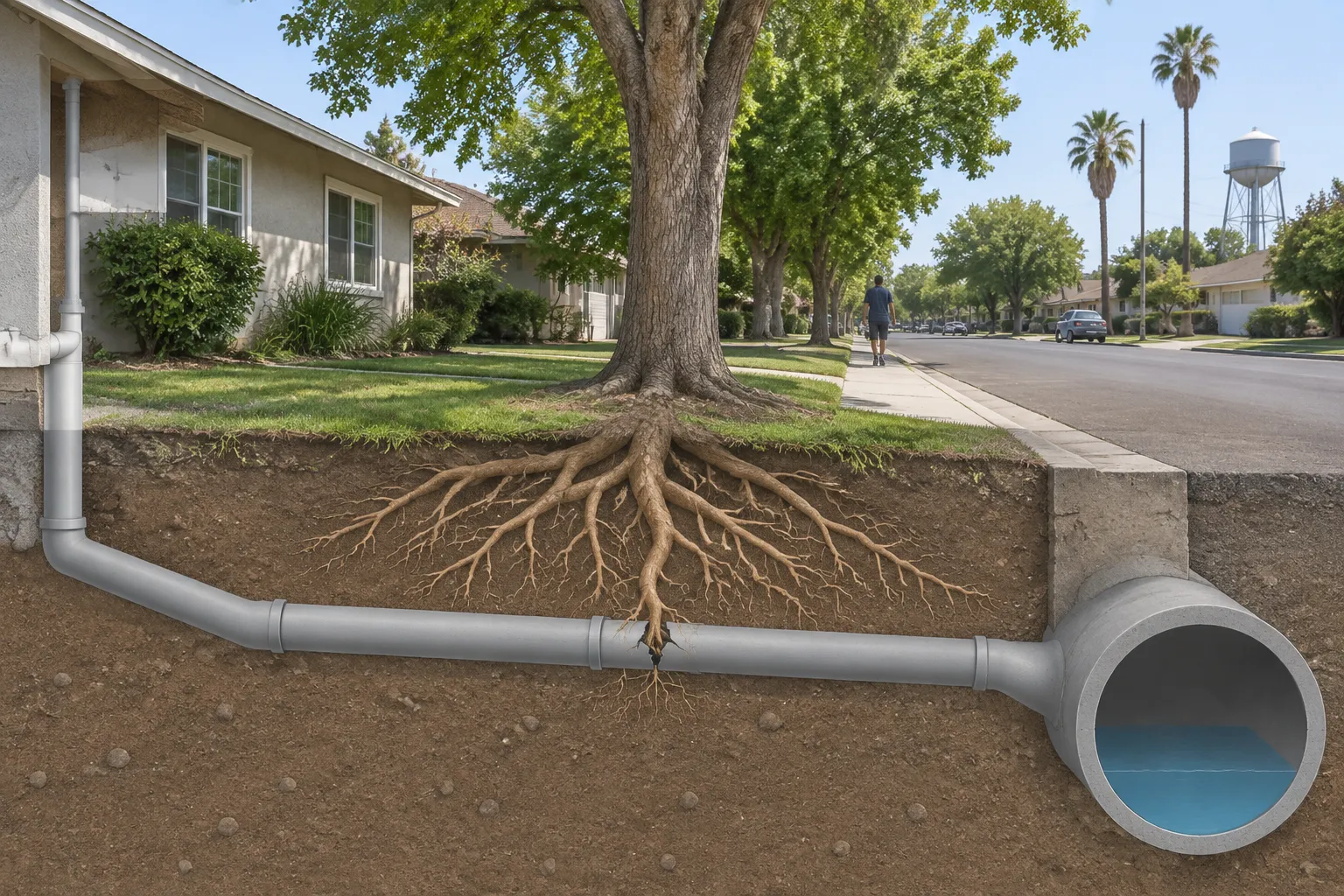
Sewer line repair starts with a camera inspection that shows where the pipe is cracked, offset, root-filled or collapsed. Short, local damage can sometimes be fixed by lining the pipe or replacing a section without trenching the whole yard. A badly collapsed pipe, a belly that holds water or a pipe under a slab may need excavation. A plumber can tell you which applies after the camera run. Start with the home page overview if you are new here, or ask for quotes below.
Can you repair a sewer line without digging?
Often yes, when the pipe is still mostly open and the damage is local. Two trenchless methods are common: lining, where a resin-coated sleeve is pulled in and cured against the inside of the old pipe, and pipe bursting, where a new pipe is pulled through as the old one is broken apart. Both usually still need an access pit or two.
Trenchless suits cracks, root intrusion, failed joints and pipes that still run on a straight line. It struggles when a pipe has collapsed, has a sag that holds water or has been joined by many fittings. The plumber's camera footage decides this. See trenchless versus traditional sewer repair and how pipe bursting works.
How serious is a cracked sewer pipe?
A cracked sewer pipe is serious because it can leak wastewater into the soil, let tree roots in and eventually block or collapse the line. Sewage backing up into the house is a health problem and a cleanup job. Early signs are slow drains on the lowest fixtures, gurgling, a sewage smell and unexplained wet or sunken patches in the yard.
If sewage is backing up, stop using water in the house, keep children and pets away from the affected area and call a plumber. Avoid touching sewage with bare skin. A plumber for a sewer smell can help sort out whether the cause is a dry trap, a vent or a broken line.
A cracked pipe that is not yet blocked still deserves a plan. Roots follow the leak, grow into the joints and widen the gap each season.
How do plumbers find the problem?
Plumbers run a small waterproof camera down the line from a cleanout or a roof vent, watching the pipe on a screen. They note the distance to each defect, and a locator on the surface marks where it sits in the yard. Cleaning the line first with a cable or hydro jet gives the camera a clear view.
A camera inspection tells you the pipe material, the number of defects, whether roots are present, and whether the line slopes correctly. Ask for the recording or screenshots. They are useful if you want a second opinion or need to show a city inspector.
Drain cleaning and sewer repair are different jobs. Hydro jetting and drain cleaning clear the pipe; they do not repair a crack. If the same clog keeps coming back, the camera usually shows why.
How do you fix a broken sewer line under the house or a concrete slab?
A line under a slab is reached by breaking through the concrete above the damage, by tunneling from outside, or by lining from a cleanout. The right route depends on depth, slab thickness, where the damage sits and what else is in the way. Slab work costs more than yard work because of concrete breakout, new concrete and flooring repairs.
The plumber should explain which access option they are proposing and what finish work is included. Ask whether concrete patching, flooring, drywall and landscaping are in the price or left to you.
Leaks in a water supply line under a slab are a different case. The page on slab leak repair cost covers that. If a pipe joint is leaking and the pipe itself is sound, a repair coupling or a section replacement may be enough without replacing the whole line.
Who is allowed to repair a sewer line in California?
California's contractor board says building sewers can be installed or repaired by contractors holding A (general engineering), C-36 plumbing, C-42 sanitation system or C-34 pipeline licenses. A general building contractor may do it only within a defined scope. Always check the license at cslb.ca.gov before agreeing to the work.
The property owner is usually responsible for the private lateral from the house to where it joins the public main, but where that handoff sits varies by city and by street. Ask the City of Stockton or your plumber where your connection point is before you assume who pays.
Digging also has a legal step. California law requires contractors to notify the regional notification center, USA North 811, at least two working days before digging. A plumbing business that digs should do this as a matter of routine, and you can ask to see the ticket number. Sewer work normally needs a permit and an inspection too, so ask the business who pulls it.
What should you ask before you hire a sewer repair plumber?
Ask for a camera inspection recording, a written scope and price, whether the method is lining, bursting or open excavation, how long the line will be out of service, and what is covered by the warranty. Ask who handles the permit, the 811 notice and the restoration of landscaping and concrete.
Prices swing widely with length, depth, access, pipe material, whether concrete is in the way and whether a permit is required, so a plumber quotes after seeing the camera footage. The sewer line replacement cost page explains the price drivers. If you need an answer quickly because the line has failed, say so when you request quotes; a local plumbing business will get back to you.