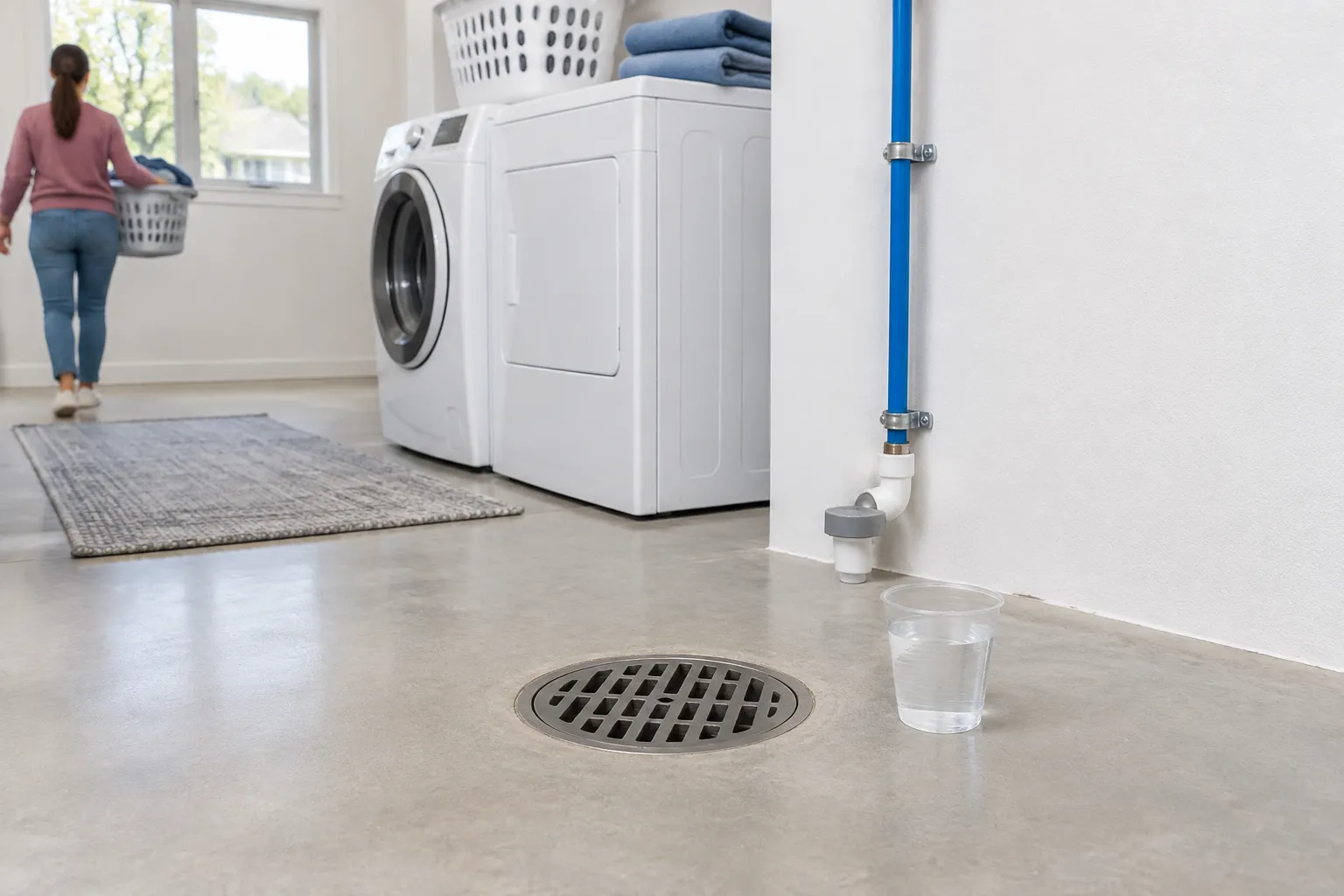
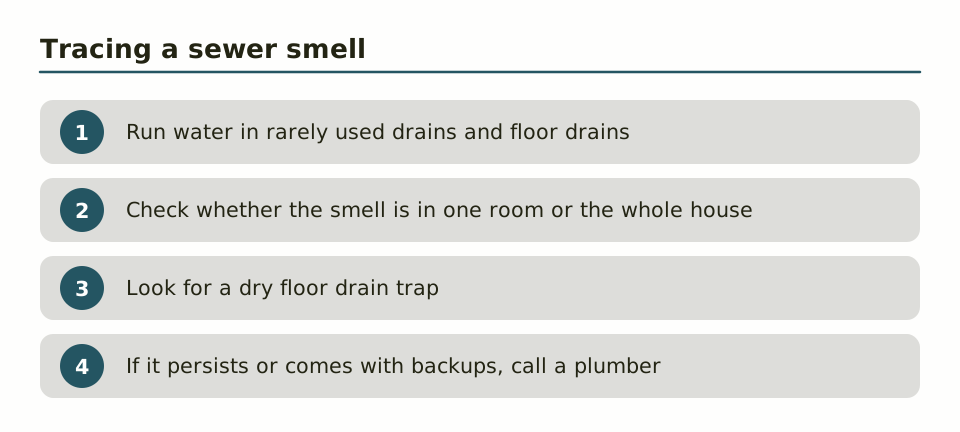
If your house smells like sewage, the likeliest cause is a dry drain trap, the U-shaped bend that holds a water seal against sewer gas. Run water in every drain you rarely use, then see if the smell fades. If it persists, comes with slow drains, wet patches in the yard or gurgling pipes, the problem may be a blocked vent or a damaged line. This page works with our guide to sewer line repair and begins with the checks you can do yourself.
Why does my house smell like sewage?
Sewer gas escapes into a home through a drain whose trap has dried out, through a blocked or damaged vent, through a failed toilet seal, or through a crack in the drain or sewer line. The Virginia Department of Health notes that dry traps and cracks in the waste line beneath or next to a home can let these gases in.
Which of those it is depends on where you smell it. A smell in one bathroom points to that room's trap, toilet seal or drain. A smell in the basement or near a floor drain points to the trap there. A smell all over the house, or outside near the cleanout or the yard, points to the main line or the vent system. Note where, and when, because that helps a plumber.
Is a sewage smell in the house dangerous?
At low levels sewer gas is mainly a nuisance, and the Virginia Department of Health says at high levels it can cause dizziness, nausea, headache, loss of appetite, irritability and drowsiness. It lists hydrogen sulfide, ammonia and methane among its components. So ventilate, find the source, and do not ignore a strong or lasting smell.
Do not confuse sewage with natural gas. Natural gas has an added odor often described as rotten eggs, and the two can be mistaken. If you smell something like rotten eggs and are not sure what it is, treat it as gas: PG&E advises leaving the house immediately, calling 911 from a safe distance, then calling PG&E, and not using switches, phones or anything that could spark inside. If you feel unwell, get fresh air and seek medical help. Gases can collect in low-lying areas such as basements, especially with poor ventilation.
How do I check for a dry drain trap?
Run water in every sink, tub, shower and floor drain for about a minute, especially ones you rarely use, such as a guest bathroom, a laundry standpipe or a basement floor drain. The VDH advises flushing water through floor drains so the trap holds water and blocks gas. If the smell goes away, the trap was dry.
Traps dry out when a drain is unused for weeks, and warm weather speeds evaporation, so a rarely used drain can dry out faster in summer. For a drain you rarely use, run some water down it every few weeks. If the smell returns days later, the trap may be leaking or siphoning, which points to a venting problem, and a local plumbing business can check it.
Why does the sewage smell come and go?
An intermittent smell often follows weather, air pressure or use. A blocked vent can create suction that pulls water out of traps, and heavy use can overwhelm a partly blocked line. Warm days speed evaporation in rarely used traps. A smell that appears after the washing machine runs, or after heavy rain, is useful information.
Smells that show up when a specific appliance drains point to that drain and its trap. A smell that comes when the toilet flushes may mean a worn wax ring where the toilet meets the floor, and you may see a bit of moisture or the toilet rocking slightly. Keep a short log of when it happens, because a pattern can save time at a visit.
What are the signs of a broken or blocked main sewer line?
Several slow drains at once, gurgling when you flush or run water, sewage backing up in the lowest drain such as a basement tub or floor drain, soggy or unusually green patches in the yard, and a persistent smell near a cleanout are warning signs. Together they point to the main sewer line, not a single fixture.
Causes include cracks, corrosion in old pipe, tree roots working into joints, and pipes that have sagged. The line may need a sewer camera inspection, a small camera on a cable that shows the inside of the pipe and where the damage is. Repairs range from clearing the blockage to digging up and replacing a section, or lining the pipe without digging. See trenchless sewer line repair versus traditional for how those options compare. For pricing drivers, sewer line replacement cost explains what moves a quote. Corrosion and age matter most in older homes, and whether a home's sewer line is clay, cast iron or plastic will shape what a plumber recommends.
When should I call a plumber for a sewer smell?
Call a local plumbing business if the smell is strong, lasts after you have run water in all drains, comes with slow drains or backups in more than one fixture, or you see wet ground near the line. Stop using water if sewage is coming up, since that adds to the backup.
Sewage backup can contain bacteria, so keep children and pets away, avoid contact with skin, and wear rubber gloves for cleanup. The plumber will ask where you smell it, which drains are slow, and whether anything changed recently, and will quote the real price after an inspection. In California, plumbing work of $1,000 or more in labor and materials, or work needing a permit, requires a contractor holding the right license, and the C-36 plumbing classification covers building sewers. This site is a quote service, and the business that visits holds its own license, which you can check on the CSLB site.