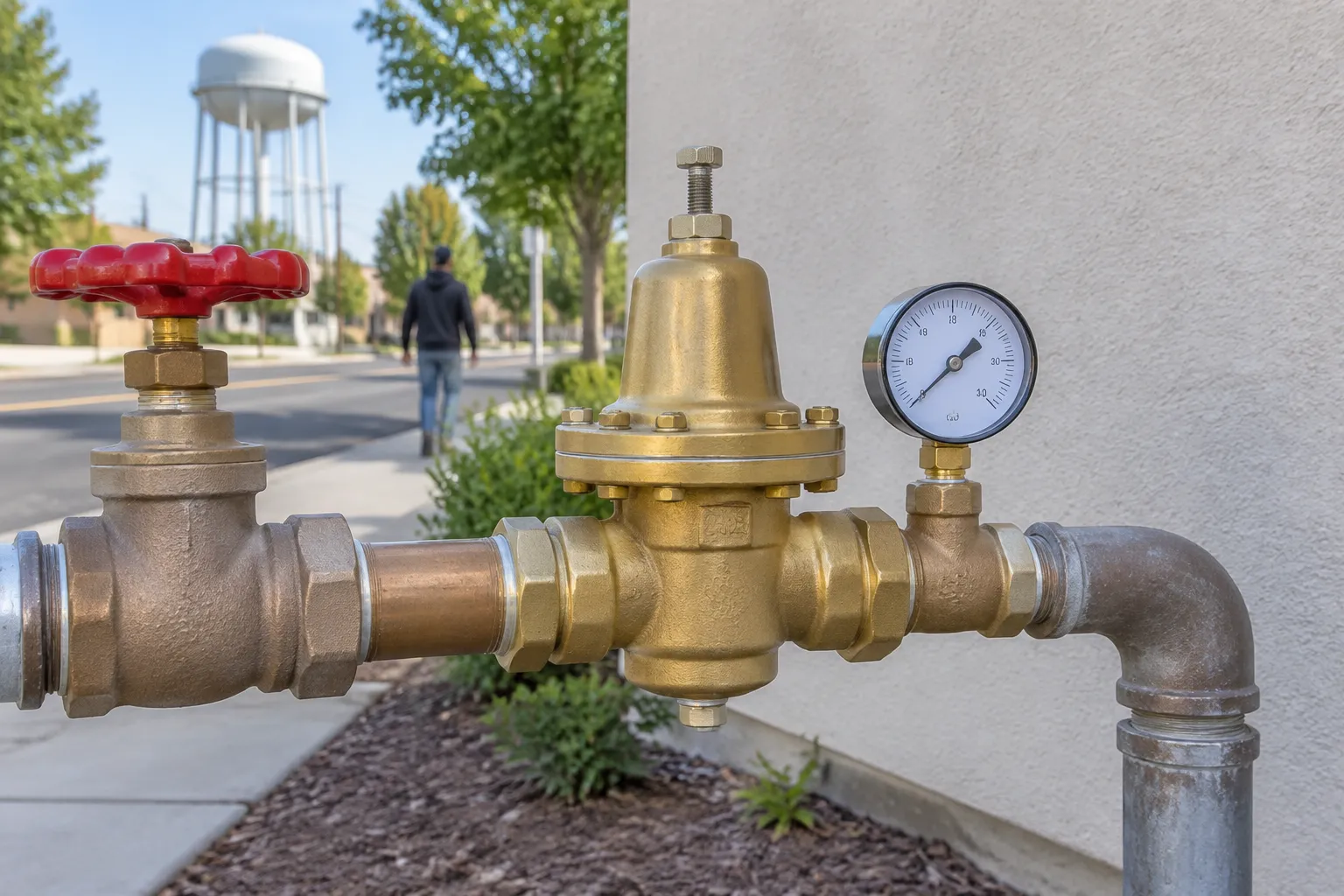
Most homes need a water pressure regulator when the supply pressure is higher than the plumbing is meant to handle. The California Plumbing Code calls for a regulator, with a strainer ahead of it, where static pressure is over 80 psi. The regulator sits near the main shutoff and holds the house at a steady level. If your pressure is too high, too low or swinging, check it first, then call a plumber. The home page explains how quotes work.
Does a house need a water pressure regulator?
Yes, when the incoming pressure is above 80 psi, according to the California Plumbing Code section on excessive pressure. Many homes have one near where the main line enters. Without it, high pressure can strain fixtures, hoses, the water heater and appliance valves, and cause leaks, banging pipes and short fixture life.
Whether yours needs one depends on the pressure at your address, which varies with elevation, distance from the main and the supplier's system. A plumber or a simple gauge tells you. If your house has no regulator and your reading is under the limit, you may not need to add one, although some local rules and new piping work call for it anyway.
The code also addresses thermal expansion, since a regulator can create a closed system where heating water raises the pressure. Plumbers commonly add an expansion tank on the water heater in that case. A water heater whose relief valve weeps can be a symptom. See water heater pressure valve leaking.
What is normal water pressure for a house?
Home plumbing is generally designed for about 40 to 80 psi, and the code limit is 80 psi. Pressure below roughly 40 feels weak in showers, and pressure well above 80 puts stress on pipes and fixtures. A gauge reading taken with no water running, called static pressure, is the number to use.
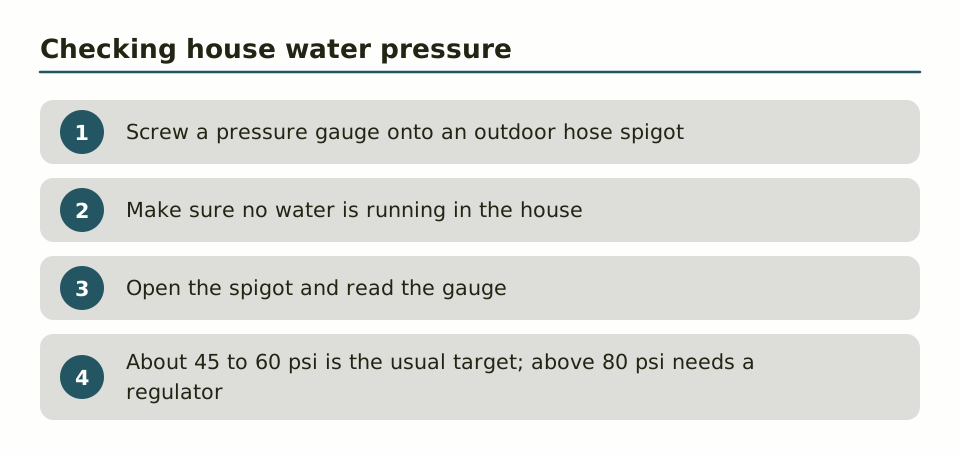
To test it, buy a pressure gauge with a hose-thread fitting at a hardware store, screw it onto an outdoor hose bib or the washing machine valve with all water off, and read the dial. Check at a different time of day too, as street pressure can change. Write down the number so a plumber can see it.
If the reading is high, a regulator is likely missing or failing. If it is low, the cause could be a partly closed valve, a clogged filter, corroded pipe or a leak. The low pressure water page and the cost to fix low water pressure page cover that side.
How do you know if your pressure regulator is bad?
Common signs: pressure that swings up and down, a sudden rise after a long period of normal use, banging or humming pipes, a weeping water heater relief valve, running toilets and leaks at supply hoses. A gauge reading above 80 psi on a house that has a regulator points to a failed one.
Regulators have a diaphragm and a spring inside and wear out. Debris from the supply line can stop them seating. Symptoms can also look like a failing water heater or a leaking fixture, so measure first. If the gauge shows steady pressure in the normal range, the regulator is probably fine and the fault lies elsewhere.
A regulator creeping upward when no water is used, called pressure creep, can raise pressure overnight. Check the gauge in the morning before use.
Who replaces a pressure regulator, and can you do it yourself?
A plumbing contractor does the job. California's C-36 plumbing classification lists pressure regulators among the devices it covers. The work involves shutting off the main, cutting and joining pipe, setting the new valve to the right pressure and testing. A permit may be required, so ask the business.
Some handy homeowners swap a regulator that uses the same union connections, and manufacturers publish instructions. Things go wrong when the main shutoff does not hold, the pipe is old, fittings are different sizes or the pressure is set wrong. If the regulator is on the supplier's side of the meter, leave it to the water utility. Where the work needs a permit, a license is required by California law for contractors.
For homes with a well, loss of pressure can come from the pump, the pressure tank or the switch rather than a regulator. A well pump system has its own pressure switch, so the first call may be to a well service rather than a plumber.
What affects the cost of replacing a regulator?
The price depends on the valve itself, how easy it is to reach, whether the pipe near it needs rework, whether an expansion tank or strainer is added and whether a permit is required. Because those vary house to house, any figure you find online is a guide and the plumber quotes the real price.
You can lower the surprise by sending the plumber your gauge reading, the age of the house, where the main shutoff is and a photo of the current valve. The plumbing inspection cost page explains how a diagnosis visit is priced. If you are planning a repipe too, see PEX and push-fit fittings.
Ready for numbers? Request quotes and include the pressure you measured.
Is a regulator the same as a water softener or filter?
No. A regulator controls pressure and does nothing for water quality. Hard water, which carries dissolved calcium and magnesium, leaves scale on fixtures and heaters and can leave skin feeling dry. A softener or a whole-house filter treats the water, and its installation is a separate job, though a plumber can do both.
Your water supplier's annual water quality report states hardness and other measures for your supply. Check it before you buy a softener or filter, since most filters do not remove hardness and a softener does not remove every contaminant. Scale can raise the load on a water heater, which links to water heater flushing.