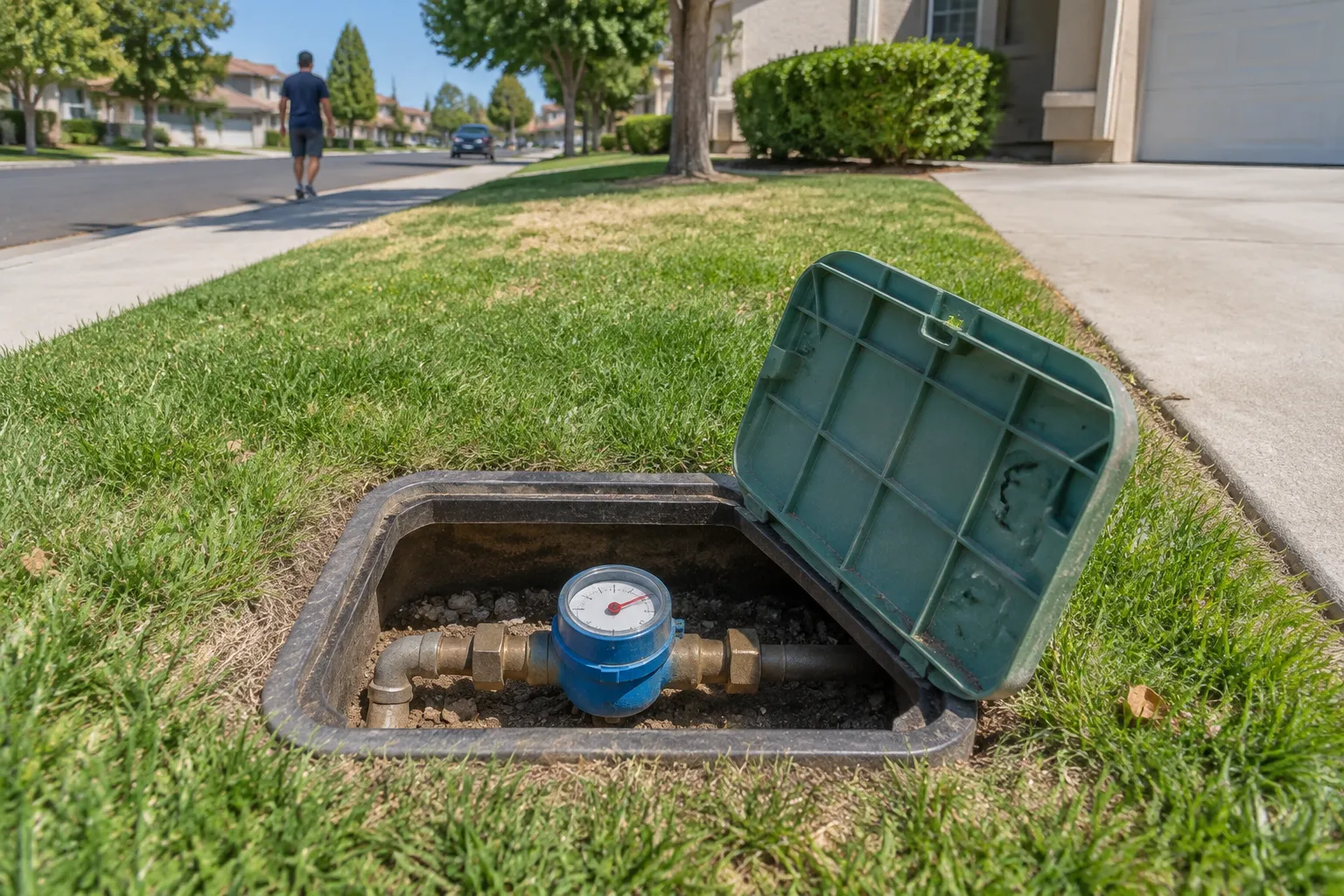
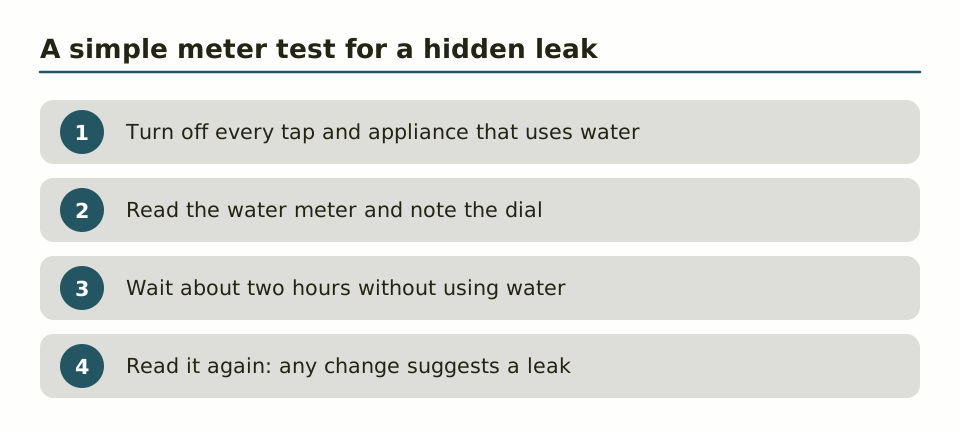
To confirm a water leak, turn off every tap and appliance, read your water meter, wait two hours without using any water and read it again. If the numbers changed, water is escaping somewhere. Close the main shut-off valve to stop it, then find out whether the leak is visible, in a wall or under the slab. This page belongs with leaks, burst pipes and repiping, and it explains the repair options so you can compare quotes from local plumbing businesses.
How do I know I have a water leak?
The clearest test is the meter test the EPA describes: read the meter, use no water for two hours, then read it again. Any change means a leak. Other signs are an unexplained jump in your water bill, damp or stained walls and ceilings, a musty smell, warm patches on the floor, and the sound of running water when everything is off.
The EPA says the average household loses more than 9,300 gallons a year to leaks, and that about 9 percent of homes leak 50 gallons or more a day. It also suggests comparing a winter month's use against your normal use: if a family of four goes over 12,000 gallons in a month in the colder months, there could be a serious leak.
Check the obvious places first: under sinks, around the base of toilets, near the water heater and at hose connections outside. Run a dry paper towel along each pipe and fitting. A leak at a visible fitting is a different job from a leak you cannot see. Your meter is usually in a box near the street, and your water utility can help you find it. The shut-off for the house is often near it, or where the pipe enters the building.
How do I stop the water until the repair?
Close the main shut-off valve, then open the lowest tap in the house to drain the pipes and ease the pressure. If the leak is at one fixture, close its own valve, such as the one under the sink, and keep the rest of the house on. Turn off the water heater's power if the hot side of the system is empty.
Soak up water and move belongings away from wet areas. Photograph the damage and the leak before you clean up. If water is near electrical outlets or the panel, keep clear and turn off the breaker only if you can do so without standing in water. If the shut-off valve will not move, do not force it. Tell the business when you call so they bring the tools. For after-hours problems, see the emergency plumbing guide, and for a burst line the burst pipe plumber page covers what comes next.
What are water pipe repair sleeves, patches and push-fit fittings?
They are products that seal a damaged section of pipe without replacing the whole run. A repair sleeve or clamp wraps around the pipe. A push-fit coupling slides over cut pipe ends and grips with an internal seal. A patch or tape wraps around a pinhole. The right one depends on the pipe material, the size and the type of damage.
Common categories:
- Clamps and sleeves. A rubber-lined band tightened around a pinhole or small split, usually for a short-term stop.
- Push-fit couplings. Brands such as SharkBite and similar fittings join copper, PEX and CPVC without soldering. Read the manufacturer's instructions for your pipe type and rating.
- Epoxy and wraps. Putty and tapes are generally treated as a temporary stop, not a lasting repair.
- Soldered or press-fit couplings. A plumber cuts out the bad section and joins in a new piece. This is the usual permanent fix for copper.
Soldering needs a dry pipe and careful fire safety around wood framing, so it is not a task for a first-timer. Repair patches sold under names like Clickfix or Flowfix may be listed in metric sizes, so check that any product you buy fits your pipe size in inches and states a rating for your pipe type. Ask the plumber whether a given product is acceptable for your pipe and code. For fittings in more detail, see push-fit versus PEX.
What happens when a leak is under the concrete slab?
A slab leak is a break in a water line that runs beneath the concrete floor. Signs include a warm spot on the floor, the sound of water running with every tap off, a spinning meter, a wet patch on flooring or low pressure. A plumber confirms it with listening equipment and a pressure test before any digging.
Repairs usually take one of three forms. A plumber can open the slab over the break and fix that section. They can reroute the line through the walls or attic so the damaged section is abandoned. Or they can repipe the house if the pipes are failing in many places. Each method has different cost and disruption, and the slab leak repair cost page covers the price drivers. Ask each business to explain why it recommends one method and what flooring or walls will be cut.
Does homeowners insurance cover a leaking or broken pipe?
Policies differ, so read yours. Many homeowners policies cover sudden damage from a burst or broken pipe, such as water that ruins the floor and drywall, but not the repair of the pipe itself, and they often exclude slow leaks that went on for a long time or wear and corrosion. Slab leaks are a common area of dispute.
Steps that help a claim: stop the water, take photos and video before cleaning, keep damaged items and receipts, and call your insurer before major work starts. Ask the plumber for a written report on the cause and location of the leak. The California Department of Insurance, at insurance.ca.gov, has consumer help if you disagree with a decision. This site cannot tell you what your policy covers.
Do I need a permit to repipe my house?
Repiping a house normally needs a plumbing permit from the local building department, and the work must be done by a licensed plumber (CSLB C-36). Check with the City of Stockton or San Joaquin County, depending on where the home sits, for how their permits and inspections work. A small leak repair at one fitting often does not need a permit.
California requires a license for jobs that need a permit or reach $1,000 or more in labor and materials. You can check a business at cslb.ca.gov. This site is a quote service, and the plumbing business that visits holds its own license. If you are repiping because pressure is poor or because pipes are old, ask for the scope in writing, including how walls and floors will be repaired. For problems with pressure rather than leaks, see the low pressure page.